A new card can help organize everyday purchases, but its value depends on how its costs and rewards fit your habits. We can compare cash back, travel rewards, introductory APRs, and credit-building options by looking at what we buy and how we pay. Credit utilization is the share of your available revolving credit that you are using.
The right fit depends on your spending patterns, credit profile, and willingness to pay fees. A card with a strong bonus may still cost more than it gives back if it changes how we shop or leaves a balance unpaid. We can use this guide to weigh features against real spending needs before starting an application.
Think about whether you want rewards for regular purchases, time to repay a planned expense, or a way to build credit. Those goals can point to different cards, even when the offers look similar at first. Start by matching the card’s main purpose to the purchases you already make, not to a bonus you would need to overspend to earn.
Key Takeaways
- Match a card’s main purpose to the spending you already do.
- Compare fees, interest rates, rewards, and eligibility rules.
- Read the exact offer terms before submitting an application.
- Plan payments around your budget, not the credit limit.
- Rewards matter most when you can use them without overspending.
How to Choose a New Credit Card for Your Needs
A useful comparison starts with the job you want the card to do, whether that is earning rewards or managing a planned balance. The best starting point is your own spending, since rewards only help when they match purchases you already make.
Compare the card’s purpose, likely eligibility, fees, and reward rules before applying. A card’s terms can shape its cost just as much as its advertised benefits. Most Discover credit card applicants must be at least 18 years old.
Use this checklist to narrow the choices:
- Purpose: Choose cash back, points, travel perks, a low introductory APR, or credit building.
- Eligibility: Check whether the card’s credit profile and other conditions fit your situation.
- Costs: Compare annual fees, transaction fees, and the interest rate after any promotion.
- Rewards: Check how you earn them, plus how and when you can redeem them.
Cash-back cards may pay a flat rate or reward selected purchase types. Points cards can suit people who want travel or other redemption choices, while low introductory APR cards can help with a planned balance. Credit-building cards may focus more on access and regular reporting than on rewards.
A reward category does not always include every purchase that seems to fit. The merchant’s classification can affect whether a charge earns the advertised rate. We should compare the card’s credit limit and terms along with its headline offer.
Before applying, compare the card’s purpose, likely eligibility, fees, and reward rules.
Some offers may have different terms for different applicants. Before applying, read the terms for the exact offer you qualify for, because terms can differ between offers.
Which Card Works Best for a First-Time Credit Card?
A first-time cardholder who wants to avoid tying up savings can compare Capital One Platinum with Chase Freedom Rise. These are two different routes for people with limited credit history.
Choose by ongoing cost and payment comfort, not rewards alone. A basic card can suit someone who wants a no-deposit account, while a card designed for newer borrowers may offer a clearer path to establishing credit.
Starter options for limited credit history
Capital One Platinum is available to applicants with fair credit or limited credit history and requires no security deposit. Capital One automatically reviews Platinum accounts for a potential credit-line increase after six months.
Chase Freedom Rise has a $0 annual fee and earns 1.5% cash back on all purchases. Chase says a balance of at least $250 in a Chase checking or savings account can increase approval chances.
That checking balance can help, but it does not ensure approval. For a first-time credit card, a manageable payment matters more than a reward rate that encourages extra spending.
A checking relationship that may help
We can compare the two cards by looking at the account features we will use every month. Freedom Rise offers cash back, while Platinum focuses on access for applicants with fair or limited credit history.
A checking relationship may be useful when it is already part of our finances. We should not move money or open an account solely because approval is certain; it is not.
For more options and application points, we can use this credit card application guide to compare starter cards with other card types.
Choose a starter limit you can keep comfortably paid down rather than treating available credit as a spending target.
How Do Secured Credit Cards Help Rebuild Credit?
A secured card uses a deposit to back a credit line, but deposit size and return rules differ by card. The deposit is not a fee, though the card may have separate fees.
Discover requires the full deposit within 35 days of approval. In 2026, its deposit is $49, $99, or $200 based on creditworthiness, and a $49 deposit unlocks a credit line of at least $200.
Deposit size and the available credit line
The Discover it Secured Cash Back Card has a maximum credit limit from $1,000 to $3,000 based on creditworthiness. Approved applicants may pay the required deposit in partial payments, but they must complete it within the 35-day window.
The Self Visa’s $100 minimum deposit is another funding point to compare. A deposit can tie up cash, so we should consider whether the amount remains available for other needs.
| Card | Deposit or credit-check terms | Annual or account fees |
|---|---|---|
| Discover it Secured | $49, $99, or $200 refundable deposit | $0 annual fee |
| Self Visa secured | $100 minimum deposit | $0 first year, then $25 |
| OpenSky Launch Secured Visa | Refundable deposit from $150 | $24 first year, then $36 |
| OpenSky Plus Secured Visa | No credit check | No annual fee |
Reporting, deposit returns, and ongoing fees
Discover regularly reports secured-card account standing to the three major credit bureaus. After a positive track record, Discover may return the deposit as a statement credit, or refund it when the account closes and the balance is paid in full.
Applicants can still be declined for a secured card. The PerPay Credit Card offers a separate no-deposit option, with paycheck information used for approval and no hard credit check.
PerPay charges a $9 monthly fee and a $9 account-opening fee. Keep enough cash available to complete a Discover deposit within its 35-day approval window.
Which Cards Do Not Require a Security Deposit?
A no-deposit card preserves cash upfront, though its eligibility rules and starting limit still matter. No deposit does not mean guaranteed approval, and a stated maximum is not a promise of your individual starting limit.
Compare the fee with the credit line you may receive. In 2026, the Imagine Visa has no security deposit, a credit limit of up to $1,000 subject to approval, and an annual fee as low as $99.
Cards with a stated initial credit line
The Total Visa requires a checking account and offers an initial credit limit of up to $500 in 2026. That condition may narrow who can apply, even though the card does not require a security deposit.
| Card | Deposit or account condition | Stated limit or benefit |
|---|---|---|
| Imagine Visa | No security deposit | Up to $1,000, subject to approval |
| Total Visa | Checking account required | Initial limit up to $500 |
| Tilt Motion Card | No deposit or annual fee | Possible increase as early as 4 months |
No-deposit cards with other eligibility conditions
The Tilt Motion Card has no annual fee or security deposit. Qualified borrowers may receive a credit-limit increase as early as four months in 2026.
These offers differ in more than how they fund a credit line. An annual fee can take a large share of a small available limit, especially when we use the card for only a few purchases.
We should also avoid treating a listed maximum as money we can count on. Approval and the amount assigned depend on the application and the card’s terms.
Check the annual fee against the available limit before deciding that a no-deposit offer is inexpensive.
What Unsecured Cards Can Fit Bad Credit?
An unsecured card for bad credit avoids a deposit, but the trade-off may be a small limit or expensive borrowing. Bad credit is defined as a score below 640 in WalletHub’s 2026 guide.
Low limits do not make high-interest debt affordable. Unsecured cards for bad credit tend to have low spending limits and charge more than twice as much interest as the average credit card in 2026.
The below-640 figure is a guide, not a universal cutoff used by every issuer. A card may still have its own eligibility rules, fees, and rates.
| Card | Stated limit or deposit condition | Another stated term |
|---|---|---|
| Credit One Bank Platinum Visa for Rebuilding Credit | $300 initial spending limit, no deposit | Unsecured card |
| Surge Platinum Mastercard | No security deposit | Reports monthly to all three major bureaus |
| Indigo Mastercard | $700 limit if approved | $175 annual fee in first year |
Credit One Bank Platinum Visa for Rebuilding Credit has a $300 initial spending limit in 2026. Surge Platinum Mastercard requires no security deposit and reports to the three major credit bureaus each month.
Indigo Mastercard has a $700 credit limit if approved and a $175 annual fee in its first year in 2026. The fee can be steep when the available line is modest.
Carrying a balance can add interest even when the original purchase was small. Compare the annual fee with the amount of credit you are actually likely to receive.
Which Cards Offer Cash Back That Fits Your Spending?
A flat-rate card is easier to use across mixed spending, while category cards reward purchases only when they qualify. Match rewards to routine costs, not to spending we would add just to earn cash back.
Categories, caps, activation, and merchant coding can change what earns the higher rate. Chase Freedom Unlimited has a $0 annual fee and offers $200 after $500 in purchases during the first three months.
Flat-rate cash back for everyday purchases
Chase Freedom Unlimited earns 5% cash back on travel booked through Chase Travel, 3% on dining and drugstores, and 1.5% on other purchases. Discover it Cash Back offers $200 after $500 in purchases during the first three months, plus a first-year cash back match.
Discover it Cash Back earns 5% in quarterly categories and 1% on other purchases. The rate applies to eligible cash back purchases, so the category list matters.
| Card | Cash-back structure | Earning condition |
|---|---|---|
| Chase Freedom Unlimited | 5% Chase Travel, 3% dining and drugstores, 1.5% other | Travel booked through Chase Travel |
| Discover it Cash Back | 5% quarterly categories, 1% other | Quarterly category purchases |
| Chase Freedom Flex | 5% in quarterly categories | Activate categories; spend limits apply |
| U.S. Bank Cash+ | 5% in two categories, 2% in one | Choose categories each quarter |
Higher rewards in selected categories
Chase Freedom Flex has a $0 annual fee and earns 5% in activated quarterly categories, subject to spend limits. U.S. Bank Cash+ requires quarterly category selection.
Cash+ earns 5% in two selected categories on the first $2,000 of combined quarterly purchases, plus 2% in a selected category. We should check whether our regular bills fit those choices.
A store may classify a purchase differently from how it looks to us, and a cap can limit the higher rate. Estimate rewards using your normal purchases after accounting for caps and category exclusions.
Which Cards Have a 0% Intro APR or Balance Transfer Offer?
A 0% introductory APR can help with a planned expense or transfer only if the payoff schedule fits the promotion. The rate is temporary, so the regular APR matters before we choose a card.
A balance-transfer fee reduces the amount we save. Wells Fargo Reflect charges 5% of the transfer, with a $5 minimum, for qualifying transfers made within 120 days.
Introductory APRs on purchases
Chase Freedom Unlimited offers a 0% intro APR on purchases and balance transfers for 15 months. Wells Fargo Reflect offers a 0% intro APR on purchases for 21 months.
Wells Fargo Active Cash offers a 0% intro APR on purchases for 12 months. We should plan to pay down a purchase before the promotion ends, rather than relying on the opening rate to last.
| Card | Purchase intro APR | Balance-transfer intro APR or qualifying detail |
|---|---|---|
| Chase Freedom Unlimited | 0% for 15 months | 0% for 15 months |
| Wells Fargo Reflect | 0% for 21 months | 0% for 21 months; transfer within 120 days, 5% fee, $5 minimum |
| Wells Fargo Active Cash | 0% for 12 months | 0% for 12 months on qualifying transfers |
Introductory APRs on balance transfers
Chase Freedom Unlimited offers a 0% intro APR on balance transfers for 15 months. Wells Fargo Active Cash offers the same introductory period for qualifying transfers.
Reflect’s 21-month period applies to qualifying balance transfers made within 120 days. A transfer fee adds to the balance, so we should include it in the payoff plan.
The APR after the promotion ends can make a remaining balance costly. Calculate the transfer fee and the balance you can repay before the promotional period ends.
Are Travel Rewards Worth an Annual Fee?
A travel card earns its keep when its points and travel perks replace expenses you already expect to have. Use the benefits you can reach, not just the welcome bonus shown in an offer.
Compare the fee with trips and purchases already in your plans. A large bonus may require substantial spending, and points can have different value depending on how we use them.

Cards for travel points and hotel stays
Chase Sapphire Preferred has a $95 annual fee and offers 75,000 bonus points after $5,000 in purchases during the first three months. It earns 5x on Chase Travel and 3x on dining and select categories.
IHG One Rewards Premier offers 180,000 bonus points and earns 5x on gas and dining. Its annual fee is $150.
| Card | Travel or points benefit | Annual fee or offer condition |
|---|---|---|
| Chase Sapphire Preferred | 75,000 points; 5x Chase Travel | $5,000 spend in 3 months; $95 annual fee |
| IHG One Rewards Premier | 180,000 points; 5x gas and dining | $150 annual fee |
| United Explorer | Up to 60,000 miles; first checked bag; 9x total miles on eligible United flights | $0 introductory annual fee |
Airline perks and annual costs
United Explorer offers up to 60,000 bonus miles, a free first checked bag, and 9x total miles on eligible United flights. Its introductory annual fee is $0.
That introductory fee may differ from later annual costs. We should count a hotel perk, checked bag, or travel credit only when it matches a trip we expect to take.
Points and travel credits help most when they replace costs already in our budget. Compare the annual fee with benefits you can realistically use during the year.
Can a Credit Card Decision Arrive Instantly?
An instant decision is a fast answer about an application, not a promise that the answer will be approval. Some decisions arrive within seconds or minutes, while others need more review.
A quick decision does not guarantee approval. In 2026, an approved applicant may receive a card number for online purchases before the physical card arrives.
What an instant decision means
The application process can follow three steps:
- Submit the application with the requested information.
- Wait for an automated decision or a notice of further review.
- If approved, check whether the account provides a digital card number.
An automated answer can be fast, but a review may take longer. An approval decision also does not mean that every account feature is ready for use at once.
Using a card before the physical card arrives
Some approved applicants can use a digital card number for online purchases before the physical card arrives. The physical card typically takes 7 to 10 business days to arrive by mail in 2026.
Digital access depends on whether the issuer makes a number available for that account. We should not assume it will work for every store or purchase.
Confirm that a digital card number is available before relying on it for a time-sensitive online purchase.
Does Prequalification Affect Your Credit Score?
A prequalification check uses a soft inquiry that does not affect your credit score, but it is not final approval. A full application is different and may lead to a hard inquiry.
A hard inquiry can stay on a credit report for up to two years but affect a score for one year. The inquiry and its effect do not last for the same length of time.
Avant offers credit limits from $300 to $3,000 and lets applicants check prequalification with a soft credit check that does not affect their score in 2026. Prequalification can help us see whether an offer may fit before a full application.
Avant’s full application results in a hard inquiry, and prequalification does not guarantee final approval. That difference matters if we are comparing several cards and want to limit formal applications.
A soft inquiry does not show that an issuer has accepted the full application. We still need to consider the card’s terms and our own payment plan.
Read the prequalification terms to see whether submitting the full application will trigger a hard inquiry.
What Affects Credit Card Approval?
Approval depends on the full application and card criteria, not a single score or a promised instant decision. Issuers weigh several details when they decide whether an application fits their requirements.
Even a secured-card application can be declined. Discover says applicants for its secured card may not be approved in 2026.
Common considerations include:
- Credit history and credit score.
- Income and existing obligations.
- Information supplied on the application.
- The specific card’s eligibility requirements.
Issuers review the information together rather than relying on one number alone. A card designed for people with limited or poor credit still has its own application standards.
U.S. credit card rejection rates were about 16% in June 2026. That rate describes applications overall and does not predict the result for any one person.
We can help avoid delays by checking that the application is complete and consistent. Review the application for accurate income and identity details before submitting it.
Can a New Card Guarantee a High Credit Limit?
A card’s advertised maximum is not a guaranteed starting limit, even when an applicant is approved. The starting line can be lower than the largest figure in an offer.
A credit limit is the most you can charge to the card. Issuers set it using credit information and other details, including income.
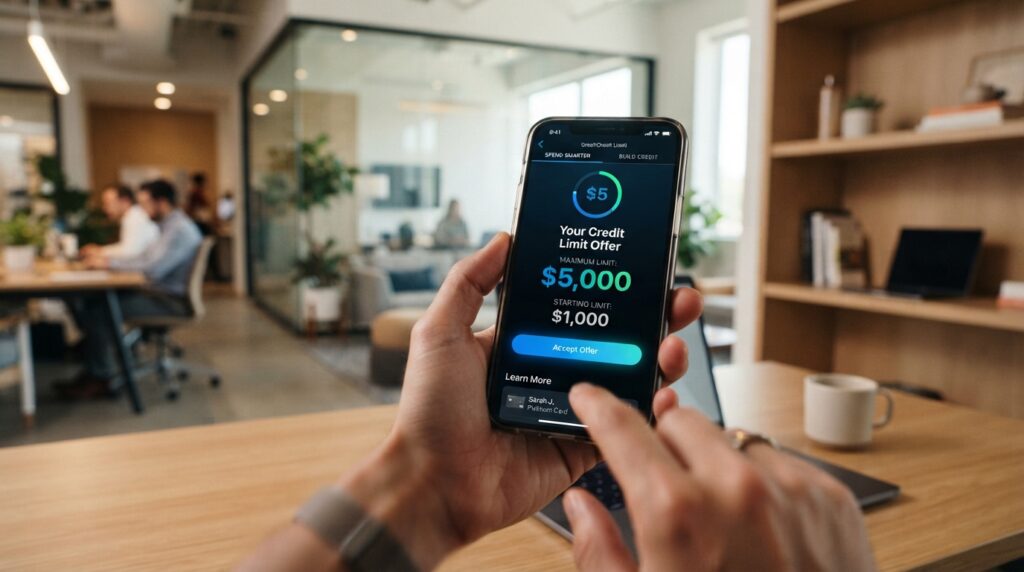
The Arro Card offers a credit line of up to $2,500, although its starting limit can be up to $300 in 2026. Those figures show a possible maximum and a possible starting line, not a promise to each applicant.
Neither a $2,000 limit nor a $3,000 limit is guaranteed for every applicant. An advertised maximum describes what may be available under the card’s terms.
We should plan purchases around the limit actually assigned. Budget from the limit actually assigned, not the largest figure shown in an offer.
What Fees and Interest Should You Compare?
Rewards cannot offset a cost you pay every year or interest that builds on a carried balance. Compare the full borrowing cost, not just a welcome offer or a headline rate.
An unpaid balance accrues interest based on the card’s APR. Discover it Secured has a 29.24% variable APR and a $0 annual fee.
We can check three main cost groups:
- Annual fee, if the card charges one.
- APR on purchases and cash advances.
- Balance-transfer fees and other transaction fees.
Paying the full statement balance by the due date can help avoid interest on purchases. If we carry a balance, the APR becomes a key part of the card’s cost.
Different transactions can have different APRs, and promotional rates can end. The Consumer Financial Protection Bureau explains common credit card agreement terms, including fees and payment rules.
Check the card’s current rates and fees before applying, since the specific offer terms control.
How Can You Use a New Card to Build Credit Responsibly?
A new card can add available credit, but its effect depends on how much you charge and whether you pay on time. Steady payments and low balances can support sound credit habits.
Payment history makes up 15% of a FICO Score, while amounts owed make up 30%. Those shares show why both payment timing and balances matter.
Payments and amounts owed
We can use a new account to make regular purchases, then pay on time and keep the balance manageable. A missed payment or a large carried balance can work against those habits.
Experian recommends keeping utilization below 10% on a new card and across cards in 2026. That is guidance, not a promise that a particular score will rise by a set amount.
New accounts and utilization
Opening an account can lower the average age of credit accounts. It also increases total available credit, which may lower utilization if balances do not rise.
More available credit helps only when spending stays controlled. Experian recommends waiting at least six months between credit-card applications as a general rule of thumb in 2026.
We can treat that spacing as guidance, not a guarantee of a score result. Set an automatic payment for at least the minimum due, then pay more when your budget allows.
What Should You Check Before Applying Online?
Before submitting an online application, make sure the card’s recurring costs and rewards match your normal spending. Applying online means completing the issuer’s application and reviewing the exact offer terms before submission.
Check the fees, APRs, and offer conditions before you send the application. An online form may ask for personal and financial details, so accuracy matters.
Use this five-item checklist:
- Confirm the exact card and offer terms.
- Check fees and APRs.
- Review reward categories and redemption rules.
- Complete the application accurately.
- Note the statement closing date and payment due date.
A credit card provides a revolving line of credit. Each monthly statement shows the amount used and the minimum payment due.
Paying the full balance by the due date can help avoid interest. A minimum payment keeps the account current, but it does not pay off the full amount owed.
Save the approval notice and set a reminder for the first payment due date.
We can keep the statement date and due date with our budget records. The statement closing date helps mark which purchases appear on that bill.
Save the approval notice and set a reminder for the first payment due date.
Conclusion
A smart card choice is the one whose costs and benefits match your spending and repayment habits. Cash back and travel rewards can be useful, but an annual fee or interest may outweigh them when we cannot use the benefits.
We can compare the exact offer terms and choose a payment plan that fits our budget. Applying only when we can manage the payments helps keep a useful card from becoming an expensive one.
Choose one or two suitable offers, compare their current terms, and apply for the card that best fits your budget.